In today’s world, people don’t depend on newspapers or TV ads to know about brands. Nowadays, people spend their time scrolling online, looking for answers, products, services and shop from home. This is where digital marketing comes in.
By 2026, digital marketing is no longer second option—it is the backbone of how businesses connect with people, build trust and grow sustainably in the digital space.
This blog explains what digital marketing is, how it works in 2026 for businesses of all sizes.
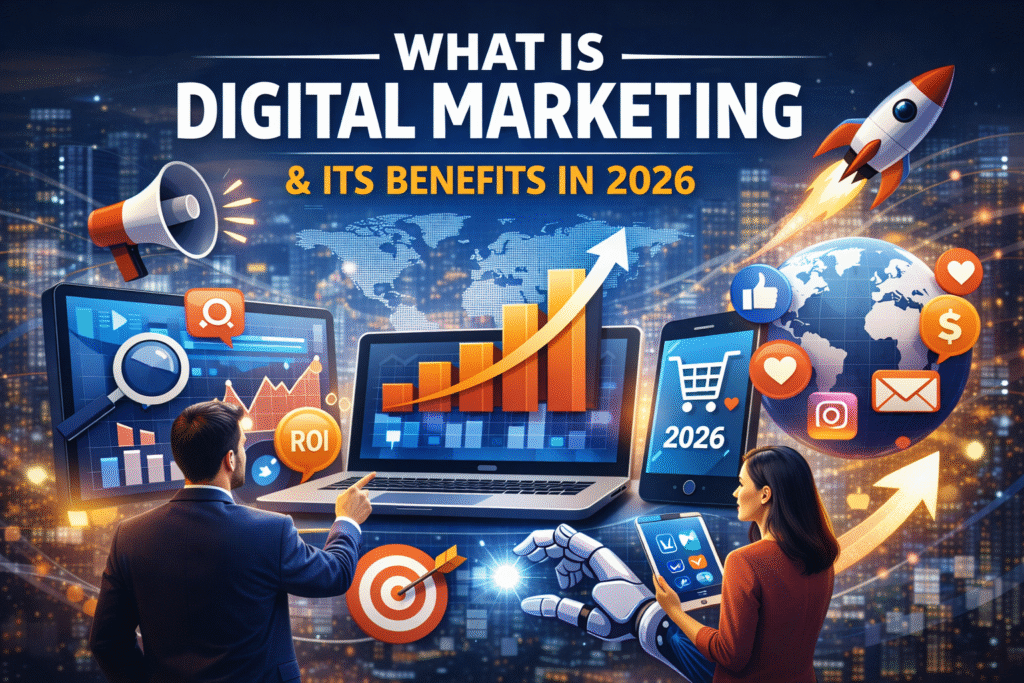
WHAT IS DIGITAL MARKETING ?
Digital marketing refers to promoting products, services or brands using online platforms and digital technologies. It helps businesses reach their target audience through the internet using channels like:
- Search engines (Google, Bing)
- Social media platforms (Instagram, Facebook, LinkedIn)
- Websites and blogs
- Email marketing
- Online advertisements
- Content marketing
- Mobile and video platforms
In simple words, digital marketing is how businesses communicate with people online, where most of their time is spent.
By 2026, digital marketing is more data-focused, customer-focused and personalized than ever before.
DIGITAL MARKETING IN 2026: Evolution, Trends and Growth
Digital marketing in 2026 is smarter and more human-centric. Some major changes include:
- AI-powered tools helping businesses understand customer behavior
- Personalized ads and content instead of generic promotions
- Voice search and mobile-first experiences
- Short-form videos attracts attention
- Strong focus on authenticity and trust
- Local and regional marketing becoming more important
Businesses that fail to adapt to these changes risk becoming invisible online.
CORE COMPONENTS OF DIGITAL MARKETING IN 2026
1. Search Engine Optimization (SEO)
SEO helps your website’s visibility on Google when people search for products or services.
In 2026, SEO focuses on:
- User experience
- Voice search optimization
- Local SEO
- High-quality, helpful content
- Good SEO means free, long-term visibility for your brand.
2. Social Media Marketing (SMM)
Social media is no longer just for entertainment—it’s where buying decisions are made.
In 2026, social media marketing includes:
- Reels and short videos
- Influencer collaborations
- Community engagement
- Direct selling through social platforms
It helps brands build relationships, not just followers.
3. Content Marketing
Content is still king, but in 2026 it must be valuable, relatable, and trustworthy.
Content marketing includes:
- Blogs
- Videos
- Infographics
- Case studies
- Educational posts
Good content positions your brand as an expert and builds long-term trust.
4. Email Marketing
Email marketing remains one of the highest ROI tools in 2026.
It is used for:
- Personalized offers
- Customer updates
- Lead nurturing
- Building loyalty
People trust emails more when they receive relevant, helpful information.
5. Paid Advertising (PPC & Social Ads)
Paid ads help businesses get instant visibility.
In 2026, paid marketing is:
- AI-optimized
- Audience-specific
- Performance-tracked
- Budget-friendly when used smartly
Ads are no longer about spending more, but spending smarter.
6. Website & Conversion Optimization
Your website is your digital office.
In 2026, a website must be:
- Fast
- Mobile-friendly
- Easy to navigate
- Conversion-focused
A good website turns visitors into customers.
BENEFITS OF DIGITAL MARKETING IN 2026:
1. Cost-Effective Compared to Traditional Marketing-
Digital marketing allows businesses to start with a small budget and scale gradually.
You only pay for:
- Clicks, Views and Conversions
This makes it ideal for startups, local businesses, and service providers.
2. Wider Reach with Targeted Audience-
Unlike traditional ads, digital marketing shows your message only to people who matter.
You can target users by:
- Location
- Age
- Interests
- Online behavior
This increases chances of conversion and reduces wastage.
3. Measurable and Trackable Results-
One of the biggest advantages of digital marketing in 2026 is transparency.
You can track:
- Website traffic
- Leads
- Sales
- Engagement
- ROI
This helps businesses make better decisions based on real data.
4. Builds Brand Trust and Credibility-
- People trust brands they see regularly online with consistent messaging.
- Through blogs, social media, reviews, and content, digital marketing helps:
- Build authority
- Create emotional connection
- Improve brand image
Trust leads to loyalty and repeat customers.
5. Supports Local and Global Growth-
Digital marketing helps businesses grow:
- Locally (through local SEO & geo-targeted ads)
- Nationally and Internationally
Even small businesses can compete with big brands in the digital space.
6. Better Customer Engagement-
In 2026, marketing is two-way communication.
Digital platforms allow:
- Direct messaging
- Comments and feedback
- Polls and surveys
- Instant support
This improves customer satisfaction and relationships.
7. Personalization at Scale-
Customers expect personalized experiences.
Digital marketing allows brands to:
- Show personalized ads
- Send customized emails
- Recommend products based on interest
Personalization increases conversions and customer happiness.
8. 24/7 Online Presence-
Unlike physical stores, digital marketing works round the clock.
Your brand remains visible even when you are offline, generating leads and awareness continuously.
Why Digital Marketing Is Essential for Businesses in 2026
By 2026, consumers trust online research more than advertisements.
If your business is not visible online:
- Customers may choose competitors
- Your brand may appear outdated
- Growth opportunities will be limited
Digital marketing is no longer a choice—it’s a necessity for survival and success.
Conclusion
Digital marketing in 2026 is about connecting with people, not just selling products. It focuses on understanding customer needs, delivering value, and building long-term relationships.
With its cost-effectiveness, measurable results, wide reach, and ability to build trust, digital marketing has become the most powerful tool for business growth.
Businesses that invest in digital marketing today are preparing themselves for a stronger, smarter, and more sustainable future.